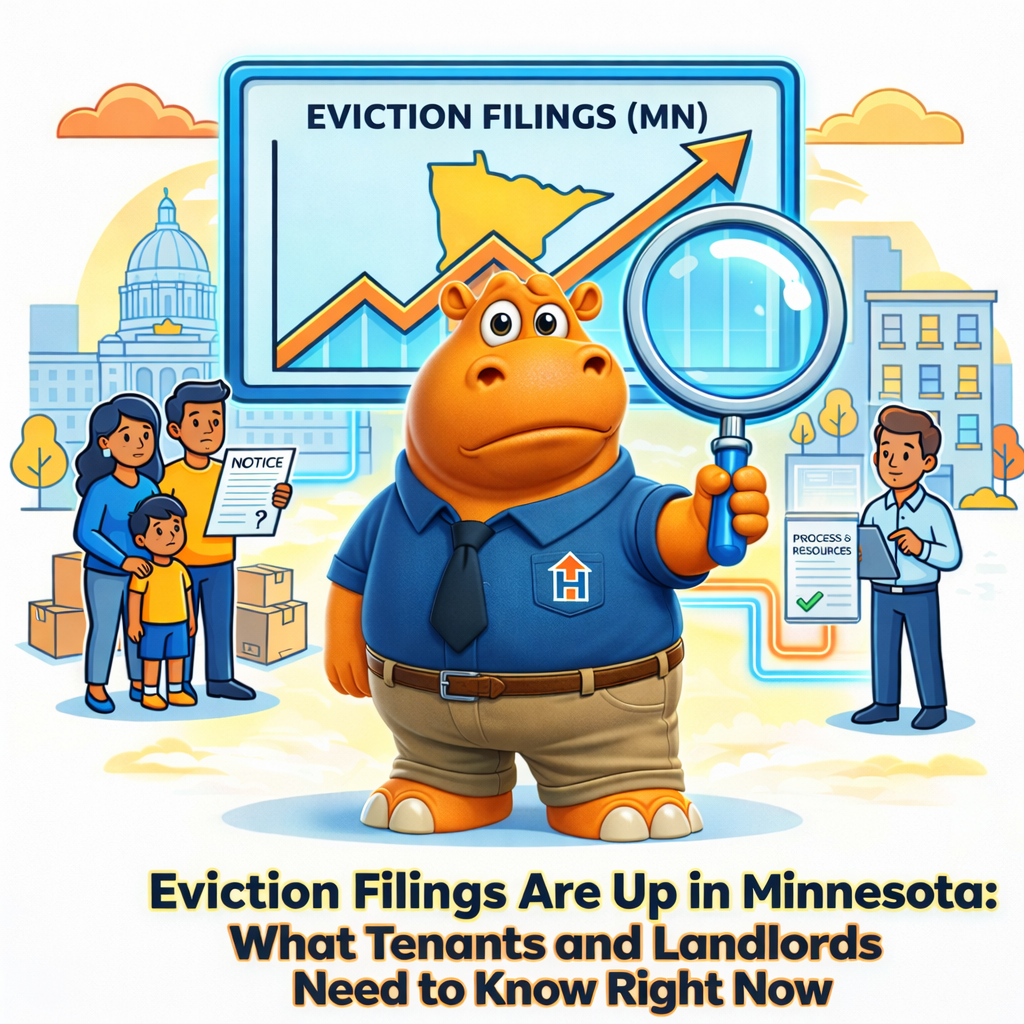
Eviction Filings Are Up in Minnesota: What Tenants and Landlords Need to Know Right Now
If you're a tenant or landlord in Minnesota, you've likely noticed increased discussion around eviction trends lately: and for good reason. Recent data shows that eviction filings in 2025 outpaced those in 2024, creating important implications for both renters and property owners across the state.
(Source KSTP.com)
Understanding these trends isn't just about numbers: it's about staying informed, knowing your rights and responsibilities, and being prepared to navigate challenges proactively. Whether you're managing rental properties or calling a Minnesota rental home, here's what you need to know right now.
The Current Landscape: By the Numbers
As of late November 2025, Minnesota recorded
23,391 eviction filings: slightly higher than the 23,282 filings in 2024. While this represents only a modest increase, certain patterns are worth noting. November 21, 2025, marked the highest single-day filing count since January 1, 2022, with 246 cases filed in one day.
Experts project that filings could surpass 25,000 by the end of 2025, approaching the 25,847 filings recorded in 2023: the first full year after Minnesota's COVID-era eviction moratorium ended. However, it's important to maintain perspective: current filing levels remain significantly higher than pre-pandemic baselines, sitting 35-37% above the average 15,200 filings recorded annually from 2018-2019.
Trend context: filings remain well above pre-pandemic levels, which averaged roughly 15,000-16,000 annually in 2018 and 2019 (Eviction Lab aligns with this broader historical baseline). Information on exact pre-pandemic numbers for Minnesota is available through Eviction Lab’s tracking system. (Source Eviction Lab)
Understanding Why Filings Are Rising
Essential Information for Tenants
Your Rights Have Expanded
Starting
January 1, 2024, Minnesota made significant changes to landlord-tenant law. Landlords must now provide a
14-day written notice before filing an eviction for non-payment of rent. This notice must include specific information such as the total amount owed and details on legal and financial assistance.
(Sources:
Homeline,
Lease Runner)
This 14-day notice requirement is now codified in Minnesota law and must include:
- The total amount due with itemized charges
- Who is authorized to collect rent
- A right-to-legal-help statement directing tenants to resources such as Legal Aid or
LawHelpMN.org (Source
Revisor MN)
In some
local municipalities, including
Minneapolis and St. Louis Park,
30-day pre-eviction notice requirements have been adopted for certain notice types or under specific ordinances.
(Sources:
St. Louis Park,
Finance Commerce)
Free Legal Help and Resources
Organizations like
HOME Line provide
free legal assistance and tenant rights information to renters statewide, and automatically send informational letters to tenants who receive eviction notices.
(Source
KSTP.com)
Help may include:
- Rights counseling
- Mediation support
- Guidance to rental assistance programs
- Court representation for qualifying tenants
Proactive Steps Tenants Can Take
- Communicate early with your landlord if you’re struggling financially.
- Document all interactions (texts, emails, receipts, notices).
- Explore local assistance resources, including 211 referrals, county emergency rental funds, and legal aid services.
Critical Updates for Landlords
New Legal Requirements
Minnesota’s updated eviction laws
require landlords to provide pre-filing notice and include detailed payment information, which represents a fundamental change from prior practice. Failure to provide the correct notice can result in dismissal of the eviction case.
(Source
Revisor MN)
Mixed Impact on Filing Patterns
Some landlords report that the
pre-eviction notice requirement has reduced the number of eviction filings, as tenants often resolve the issue once they receive the notice. However, this also means landlords may wait longer to initiate formal proceedings, potentially increasing the number of months tenants remain behind in rent. (Source
KSTP.com)
Best Practices for Landlords
- Establish early communication channels with tenants - if you have your property management through
Housing Hub, please contact us for tenant communication services included in your monthly management plan.
- Ensure compliance with notice requirements (and maintain records).
- Consider flexible payment plans to prevent formal eviction.
Twin Cities-Specific Insights
Available Resources and Support
For Tenants
- HOME Line – statewide legal help and advocacy
- 211 – resource directory for rental assistance
- Local county rental assistance programs
For Landlords
Housing Hub also offers guidance and support for tenants and property owners navigating these legal and market changes.
Looking Ahead: Building Positive Relationships
While eviction filings have increased compared to 2024, the trend also highlights
opportunities for proactive engagement.
For tenants:
- Know your rights
- Seek help early
For landlords:
- Understand legal obligations
- Maintain positive tenant relationships
- Use early intervention strategies
Take Action and Moving Forward
The increase in eviction filings reflects ongoing economic pressures in Minnesota’s rental market, but
it doesn’t have to define your experience. Staying informed about your rights and responsibilities, and using available resources, equips both tenants and landlords to face challenges with confidence.
At
Housing Hub, we’re committed to supporting tenants and property owners through these evolving circumstances. Whether you’re a renter seeking resources or a landlord exploring professional support, we’re here to help.